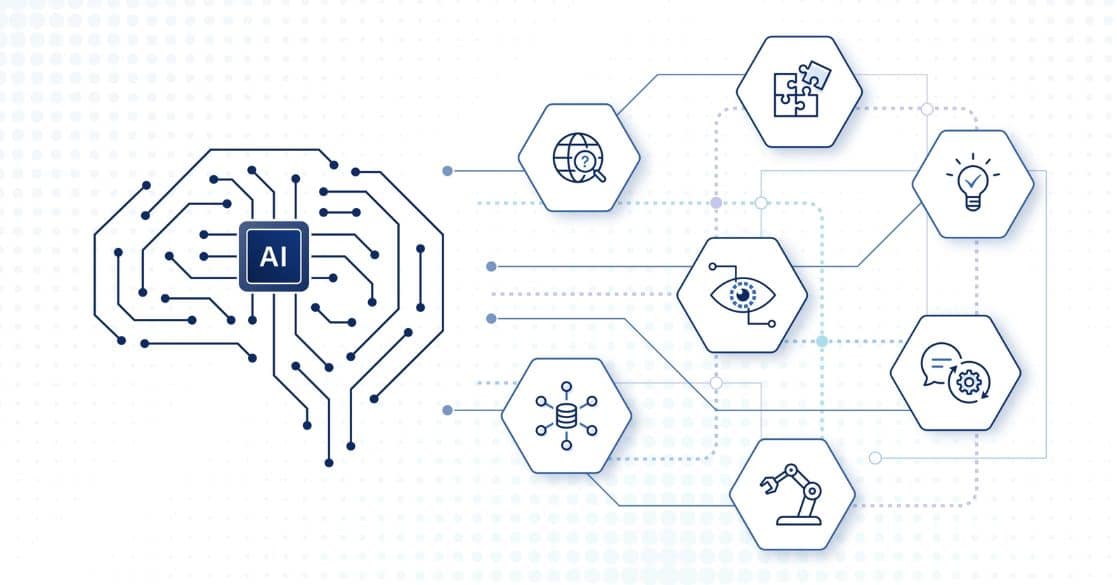
Artificial intelligence (AI) is no longer a futuristic concept — it is woven into our daily lives in 2026, powering everything from intelligent agents that manage complex workflows to multimodal models that generate video, code, and strategic insights. Yet this transformation did not happen overnight. The history of AI spans centuries of human imagination, decades of scientific breakthroughs, periods of hype and disappointment (known as “AI winters”), and an explosive acceleration in the 2020s driven by massive data, compute power, and architectural innovations like the transformer.
This comprehensive article traces the full timeline of artificial intelligence — from philosophical roots in antiquity to the agentic, enterprise-focused AI systems dominating 2026. We’ll explore key milestones, the reasons behind AI’s cyclical rises and falls, and exactly how AI has become the indispensable infrastructure it is today.
Ancient Dreams and Philosophical Foundations (Pre-20th Century)
The idea of creating intelligent machines dates back thousands of years. Greek myths featured automata crafted by Hephaestus, such as the bronze giant Talos, and Pygmalion’s living statue Galatea. In the 10th century BC, Chinese engineer Yan Shi reportedly presented King Mu of Zhou with mechanical figures that could move independently.
During the Enlightenment, inventors built sophisticated mechanical devices. In 1642, Blaise Pascal created the Pascaline, an early calculator. In 1726, Jonathan Swift’s Gulliver’s Travels imagined “The Engine,” a machine that could generate ideas and books. By the early 20th century, science fiction introduced the word “robot” in Karel Čapek’s 1921 play R.U.R. (Rossum’s Universal Robots), and Leonardo Torres y Quevedo demonstrated a chess-playing machine in 1914. These early concepts reflected humanity’s long-standing desire to build thinking machines, but they remained purely mechanical or fictional until the dawn of electronic computing.
The Theoretical Foundations (1940s–1955)
The modern era of AI began with the rise of electronic computers during and after World War II. In 1950, Alan Turing published his seminal paper “Computing Machinery and Intelligence,” proposing the Turing Test — a method to determine if a machine can exhibit intelligent behavior indistinguishable from a human. This laid the philosophical groundwork for evaluating machine intelligence.
In 1951, Marvin Minsky and Dean Edmonds built SNARC, the first artificial neural network using 3,000 vacuum tubes to simulate 40 neurons. Arthur Samuel developed a self-learning checkers program in 1952, coining the term “machine learning.” These efforts showed that computers could do more than calculate — they could learn and adapt.
The Birth of AI as a Field (1956)
The official birth of artificial intelligence occurred at the Dartmouth Summer Research Project in 1956. Organized by John McCarthy, Marvin Minsky, Nathaniel Rochester, and Claude Shannon, the workshop coined the term “artificial intelligence” and brought together pioneers who believed machines could simulate human intelligence. Early optimism was high: researchers predicted machines would soon match or exceed human capabilities in language, problem-solving, and creativity.
Early Successes and the First AI Winter (1956–1970s)
The 1950s and 1960s saw rapid progress. In 1958, Frank Rosenblatt’s Perceptron introduced the first trainable neural network. Programs like ELIZA (1966), a primitive chatbot that simulated conversation, and SHRDLU (1970), which understood natural language commands in a blocks world, captured public imagination.
However, limitations soon emerged. Computers lacked sufficient processing power and data, and many ambitious goals proved far harder than anticipated. Funding dried up after reports like the 1973 Lighthill Report in the UK criticized the lack of measurable progress. This led to the first “AI winter” — a period of reduced investment and skepticism that lasted through much of the 1970s.
Revival Through Expert Systems and the Second AI Winter (1980s–1990s)
The 1980s brought a resurgence with “expert systems” — rule-based programs that captured human expertise in narrow domains. Japan’s Fifth Generation Computer Project and commercial systems like XCON (used by Digital Equipment Corporation) demonstrated practical value in industry. Neural network research also advanced with backpropagation algorithms.
Yet by the late 1980s, expert systems proved brittle and expensive to maintain. The collapse of the Lisp machine market and another funding crunch triggered the second AI winter (1987–1994). Progress slowed, but foundational work in machine learning, Bayesian networks, and probabilistic reasoning continued quietly.
The Rise of Machine Learning and Statistical AI (1990s–2010s)
The 1990s marked a shift from symbolic, rule-based AI to statistical and data-driven approaches. In 1997, IBM’s Deep Blue defeated chess champion Garry Kasparov, proving machines could excel at complex strategy games. In 2011, IBM’s Watson won Jeopardy!, showcasing natural language understanding and knowledge retrieval.
The real turning point came in the 2010s with the deep learning revolution. In 2012, AlexNet’s victory in the ImageNet competition demonstrated the power of convolutional neural networks fueled by GPUs and massive datasets. Companies like Google, Facebook, and Baidu poured resources into deep learning for computer vision, speech recognition, and recommendation systems. AlphaGo’s 2016 victory over Go champion Lee Sedol further highlighted AI’s growing strategic capabilities.
The Transformer Revolution and the Generative AI Explosion (2017–2023)
The architecture that changed everything arrived in 2017 with the paper “Attention Is All You Need,” which introduced the transformer model. This enabled parallel processing of sequences and paved the way for large language models (LLMs).
OpenAI’s GPT series accelerated the boom: GPT-3 (2020) with 175 billion parameters showed remarkable few-shot learning, while ChatGPT (launched November 2022) brought generative AI to the masses, reaching 100 million users in record time. GPT-4 (2023) added multimodal capabilities, and competitors like Google’s Gemini, Anthropic’s Claude, and Meta’s Llama family emerged rapidly. Generative AI tools for text, images (DALL-E, Midjourney, Stable Diffusion), and code transformed creative and professional work.
AI in 2024–2026: From Chatbots to Agentic Intelligence and Enterprise Infrastructure
By 2026, AI has matured far beyond early hype. The field has shifted from experimental chatbots to autonomous “agentic AI” — systems that plan, reason, use tools, and execute multi-step tasks with minimal human supervision.
Key developments in this period include:
- Massive Scaling and Efficiency: Frontier models like Anthropic’s Claude Opus 4.6 (released February 2026), OpenAI’s GPT-5 series, Google’s Gemini 3.x, and Meta’s Llama 4 emphasize not just size but efficiency, long-context reasoning (up to 1M+ tokens), and multimodal understanding (text, image, video, audio). Smaller, specialized “efficient models” now rival giants for many tasks, driven by hardware-aware design and mixture-of-experts architectures.
- Agentic and Multi-Agent Systems: 2026 is widely called the year of production-ready agents. Tools like Claude Code and Cowork allow AI to manage entire projects autonomously. Multi-agent frameworks (with protocols like MCP, ACP, and A2A) enable teams of specialized AI agents to collaborate on complex workflows in marketing, software development, finance, and research.
- Multimodality and World Models: Models now seamlessly handle video generation, physical simulation, and robotics. While OpenAI discontinued its standalone Sora consumer app in March 2026 due to high compute costs and lower-than-expected engagement, the underlying research continues in world simulation for robotics and real-world tasks.
- Enterprise Adoption and “AI Factories”: AI is no longer a consumer novelty but core infrastructure. Companies build “AI factories” — dedicated systems of data, models, and compute — to embed generative and agentic AI across operations. Open-source models (Granite, OLMo, DeepSeek) and domain-specific fine-tunes dominate practical deployments.
- Edge AI and On-Device Intelligence: Smaller models run locally on phones, laptops, and IoT devices, improving privacy and speed.
In 2026, AI trends emphasize real-world impact: agentic systems, standardized benchmarking, proactive governance, and integration with quantum and energy-efficient hardware. Competition has shifted from raw model performance to systems, interoperability, and measurable ROI.
Challenges, Ethics, and Societal Impact
AI’s rapid rise has brought challenges. Compute costs remain enormous, raising sustainability concerns. Bias, hallucinations, deepfakes, and job displacement are ongoing issues. Regulatory debates intensify globally, with governments balancing innovation against safety and geopolitical competition (especially between the US and China). Ethical frameworks — such as Anthropic’s Constitutional AI — aim to align models with human values. Wikipedia and other platforms have tightened rules on AI-generated content to preserve trust.
The Future of AI: Beyond 2026
Looking ahead, experts predict continued progress toward more reliable, efficient, and collaborative systems. World models that understand physics and causality, continual learning, and tighter human-AI symbiosis will define the next decade. While true artificial general intelligence (AGI) remains a long-term goal, 2026 marks the point where AI has become essential infrastructure rather than a mere tool.
Conclusion: AI as Humanity’s Most Powerful Partner
From ancient myths of intelligent automata to the agentic AI systems of 2026, the history of artificial intelligence is one of persistence through winters, breakthroughs through data and compute, and relentless human ingenuity. Today, AI is not just smarter — it is more useful, more integrated, and more transformative than ever before.
As we stand in April 2026, the question is no longer “What can AI do?” but “How will we responsibly shape what it becomes next?” The journey continues, and the best chapters are still being written.
Sources include official timelines from Coursera, TechTarget, IBM, Wikipedia, Stanford AI100, and 2026 industry reports from Microsoft, IBM, MIT Sloan, and leading AI labs.